Curriculum and Learning
The NIES K–12 curriculum is a bilingual programme that gives equal importance to Arabic and English. It is designed around a wide range of learning resources rather than relying on a single prescribed textbook.
English is the primary language of instruction for Mathematics, Science, and Information and Communication Technology (ICT), while Arabic and Social Studies are taught in Arabic.
This approach enables students to develop strong academic language skills in both languages while maintaining a meaningful connection to their national identity and culture.
Learning Beyond the Classroom
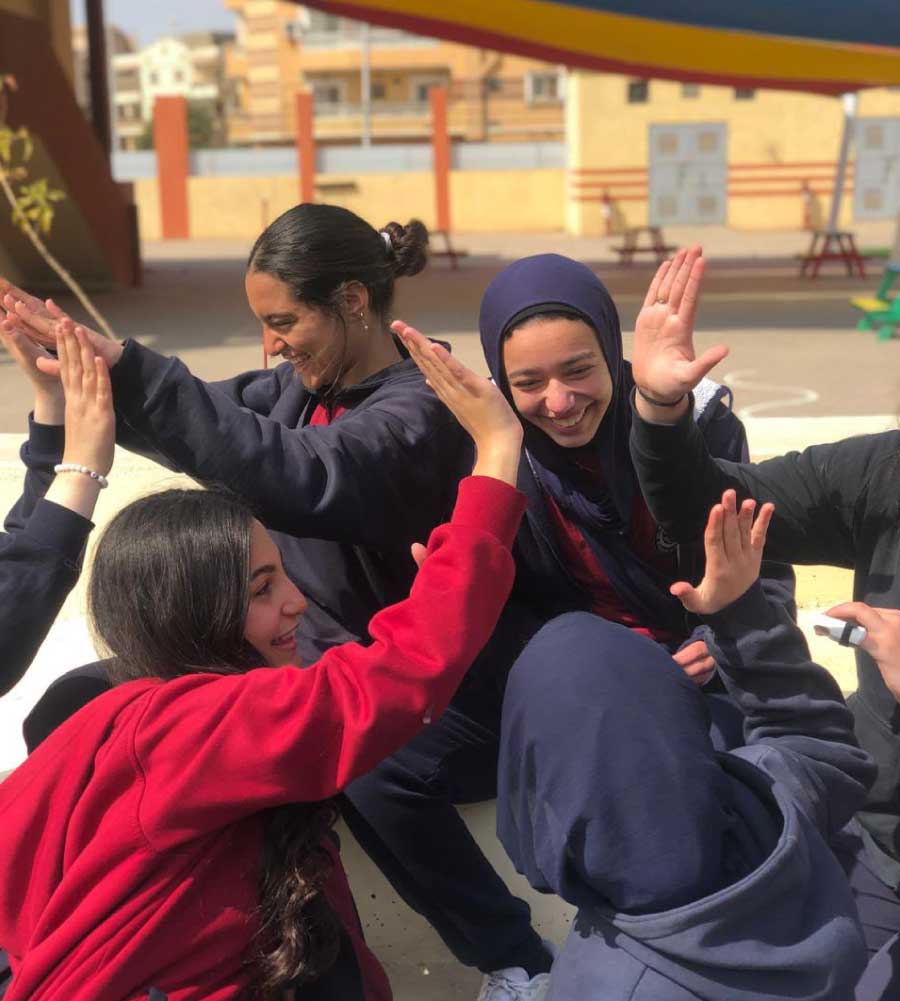
NIES promotes meaningful learning through inquiry, projects, collaboration, and practical application.
Students are encouraged to explore ideas, ask questions, conduct research, solve problems, and connect learning across different subjects. From the early years onward, the curriculum supports the development of essential life and future-ready skills.
Key areas of development include:
Critical and analytical thinking
Communication and collaboration
Scientific inquiry and computational thinking
Digital literacy and ICT skills
Entrepreneurship and innovation
Artistic, musical, and physical education
Learning Stages and Assessment
Kindergarten Stage
- Grades: KG1, KG2
- External Assessment: None
Primary Stage
- Grades: 1 to 6
- External Assessment: None
Preparatory Stage
- Grades: 7 to 9
- External Assessment: CNIPE
Secondary Stage
- Grades: 10 to 12
- External Assessment: CNISE
The Nile International Certificates
The Nile International Education System enables students to obtain two internationally recognised certificates:
NIES Certificates
CNIPE
Certificate of Nile International Preparatory EducationAwarded upon completion of basic education at the end of Grade 9.
NIES Certificates
CNISE
Certificate of Nile International Secondary EducationUpon completing pre-university education at the end of Grade 11 or 12.
The programme supports students in developing advanced academic knowledge, independent learning habits, and the higher-order thinking skills required for university study.
Official Recognition
Recognition by the Ministry of Education and Technical Education of the Nile curriculum for the Arabic language as a compulsory curriculum and exempting students from taking the Ministry of Education exam for the Arabic language of the MOETE.
UK National Academic Recognition Information Centre (NARIC)
(ENIC) European Network of Information Centre Which was stated in his report that:
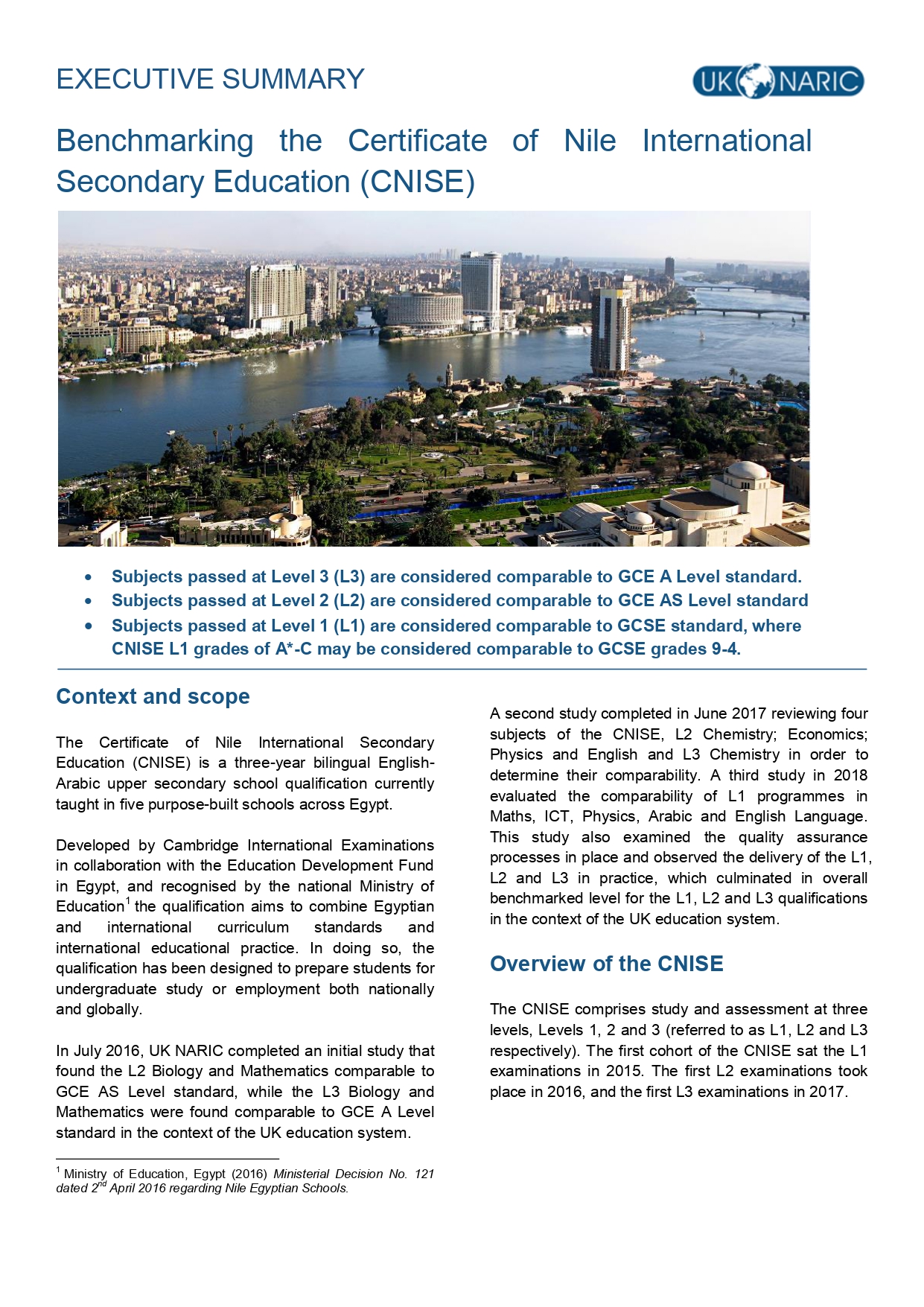
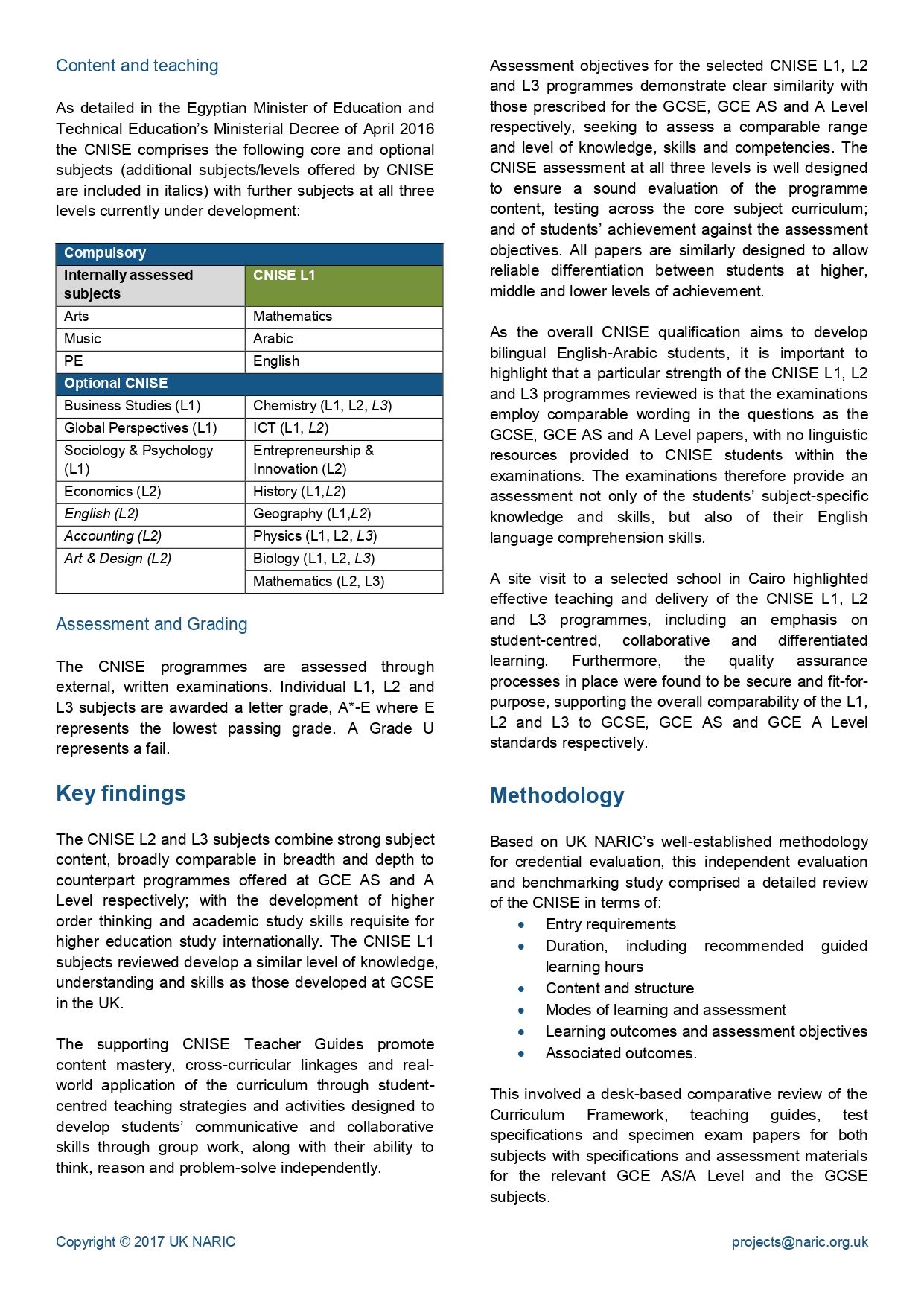
Click on the images to view them in full size
Secondary Curriculum
The CNISE curriculum offers a broad range of subjects across three levels, allowing students to build pathways that reflect their academic interests and future aspirations.
Level 1
- Mathematics
- Biology
- Chemistry
- Physics
- History
- Geography
- Global Perspectives
- Arabic
- English
- ICT
- Business Studies
Level 2
- Mathematics
- Biology
- Chemistry
- Physics
- History
- Geography
- English
- ICT
- Economics
- Entrepreneurship & Innovation
- Accounting
- Art & Design
- Artificial Intelligence and Advanced Automation
- Project Management
- Digital Marketing
Level 3
- Mathematics
- Biology
- Chemistry
- Physics
- History
- Geography
- Digital Marketing